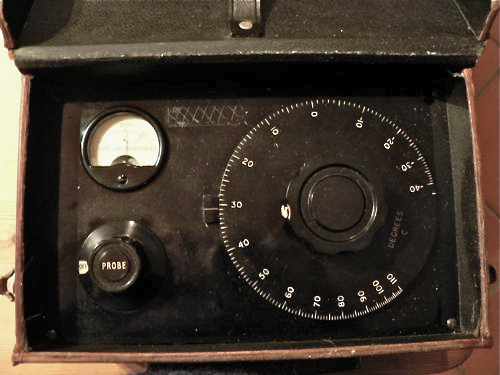
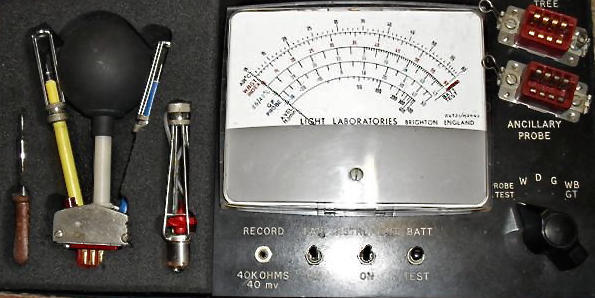
Light Laboratories Brighton Thermometer, range -40C to +110C. Housed in leather box with carrying handle.
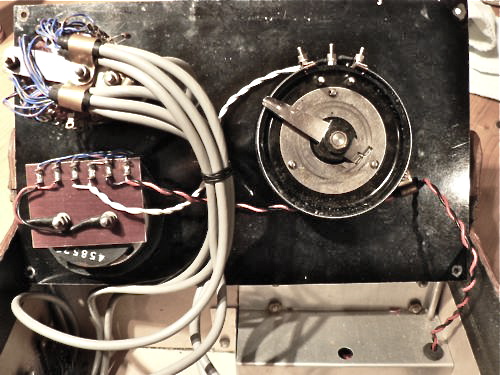
This is a bridge type instrument with the capability of measuring the temperature of up to six items. The box contains a 8 position switch (off/test/1/2/3/4/5/6), meter, 3;1 taper 1000 ohm variable resistor and a 1.2 volt rechargeable cell. The bridge components which comprise 4 wire wound resistors for each temperature sensor are housed in the individual 8 gold plated contact plugs.
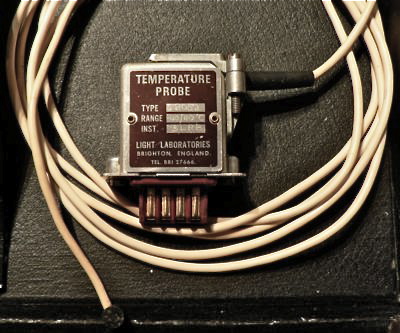
There are many references to this firm on the internet, but I have not found out very much about the firm except that it was based in several places in Brighton over the years. The earliest reference I have found is on page 332 of the British Medical Journal of September 7th 1946. In the short article on this page is described a skin temperature measuring instrument measuring from 10-40 degrees Centigrade to within 0.1 degree. The instrument based upon a Wheatstone bridge (as mine is) was made by Mr Arthur Light.
Peter Harrison came across my website when googling "Light Laboratories". He worked at their small company located in Ship Street Gardens close to the Hippodrome, Brighton and used to assemble and calibrate their temperature measuring "boxes". He remembers engraving the temperature scale around the perimeter of the dial wheel in the large disc shown in the picture above. Each "box" had a unique dial wheel. This was around 1964 when he was 19.
Chris Wild came across my website whilst google searching for information on his family history. He was looking for Arthur Dennison Light, a distant cousin by marriage. He has found circumstantial evidence that he was associated with Light laboratories. His brother Walter was living in Brighton in 1911 but Arthur D, was living in Walthamstow. Unfortunately he has not found out what they were doing for a living.
He has found out quite a bit about Arthur Light which I reproduce
here:
"He was born in 1876 in Hampshire, died in 1970 and was one of 15
children. In the early 1900's he practiced as a medical electrician or
galvanist in London trading as The Health Culture Company and The
Institute of Natural Therapeutics. He was involved in a couple of
partnerships, one of which was with two of his brothers, Alfred Weldon
and Walter. He was also involved with a B Copson Garrett who seems to
have been a forerunner in electricity and medicine. In 1910 he was
operating a business as a magnetic appliance manufacturer. Then in
1914/15 he was found guilty of "providing false analyses". This
presumably meant he could no longer practice and he turned his
attention to the manufacture of medical instruments. It is possible
that Light Laboratories was set up by Arthur and Walter. Walter was
living in the Brighton area during the early 1900's and was, by all
accounts, the entrepreneur of the family, although some considered him
a "bit of a rogue". The only evidence I have for Arthur being in
Brighton is his connection with Light Laboratories and their being in
Brighton."
Chris has located one of his patents http://v3.espacenet.com/
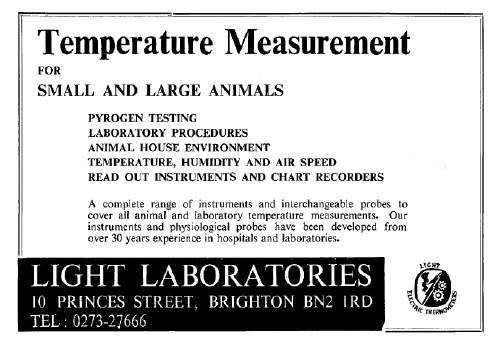
An advertisement from the late 1970's
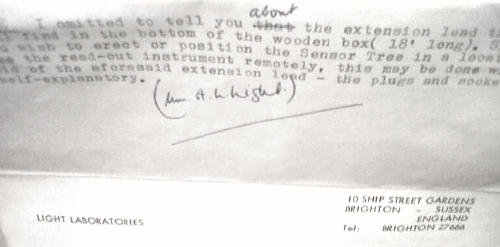
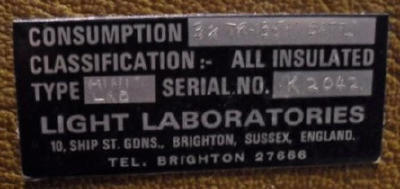
David John Collins (gw4ynp) found a 1946 wbgr meter in a garage,on looking on the internet to see what they were used for he came across my web site and and saw that Chris Wild was looking for his family tree. The paperwork with the meter is signed by a Mr A L Light (Light Laboratories) 10 Ship Street Gardens Brighton.
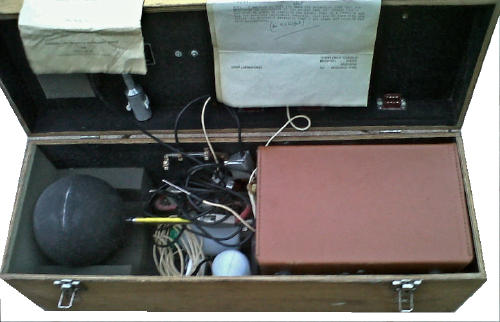
He adds: The wet bulb globe tester (wbgt) was used as a heat stroke checker and still is commonly used as a guide for environmental heat stress to prevent heat stroke during physical exercise or wile at work, they were developed by the military. You can still buy them today but they are hand held instruments.
The following pictures of a similar instrument were sent to me by Colin Mckechnie some time ago.
John Sallis ex Arthur Sallis Radio Control Ltd 93North Road Brighton who used to sell Mr A Light ex WD Yaxley switches said he would only buy certain types, the contact had to be spooned shape, with a lifting action as the wiper rotated. John who knew him quite well over a number of years 1950 to the late 60s the following information:
“Light Laboratories made some types of medical temperature measuring equipment, I can remember seeing such an instrument whilst visiting my son in hospital after having his tonsils removed in the late 60s. Arthur Light himself could be described as a complete gentleman, quiet spoken, sporting a small goatee beard. We had many people like him visit our shop over the years, some were completely nuts others weren't, among those that were not was a Mr Clare of Clare instruments Findon, a Mr Barbour of Marine Auto Pilots Hove, A P Besson of AP Besson and partners still in business to day.
As for Arthur Sallis Ltd the business was founded in November 1949 I was only 6 years old at the time born 1943 I have many vivid memories of the surplus radio trade I would work in the shop in Brighton on Saturdays and during my school holidays. My father and I ran the business until his death in 1985 by that time we had moved away from ex WD parts into the world of the Semiconductor, by 1985 the DIY radio/electronics market was on a downward spiral, so on my late father's death I decided to close the business cash in and buy an Arable farm in Devon Nr Okehampton- what a change!! Never got round to the RAE But was a well known pirate Top band 80m and had some good DX on 20 & 15 during 1957/58 IGY lots of sun spots all on home built gear my last project was an all band SSB exciter using a Collins mechanical filter.”
More recently John forward this photograph of the the shop with the
following comments.
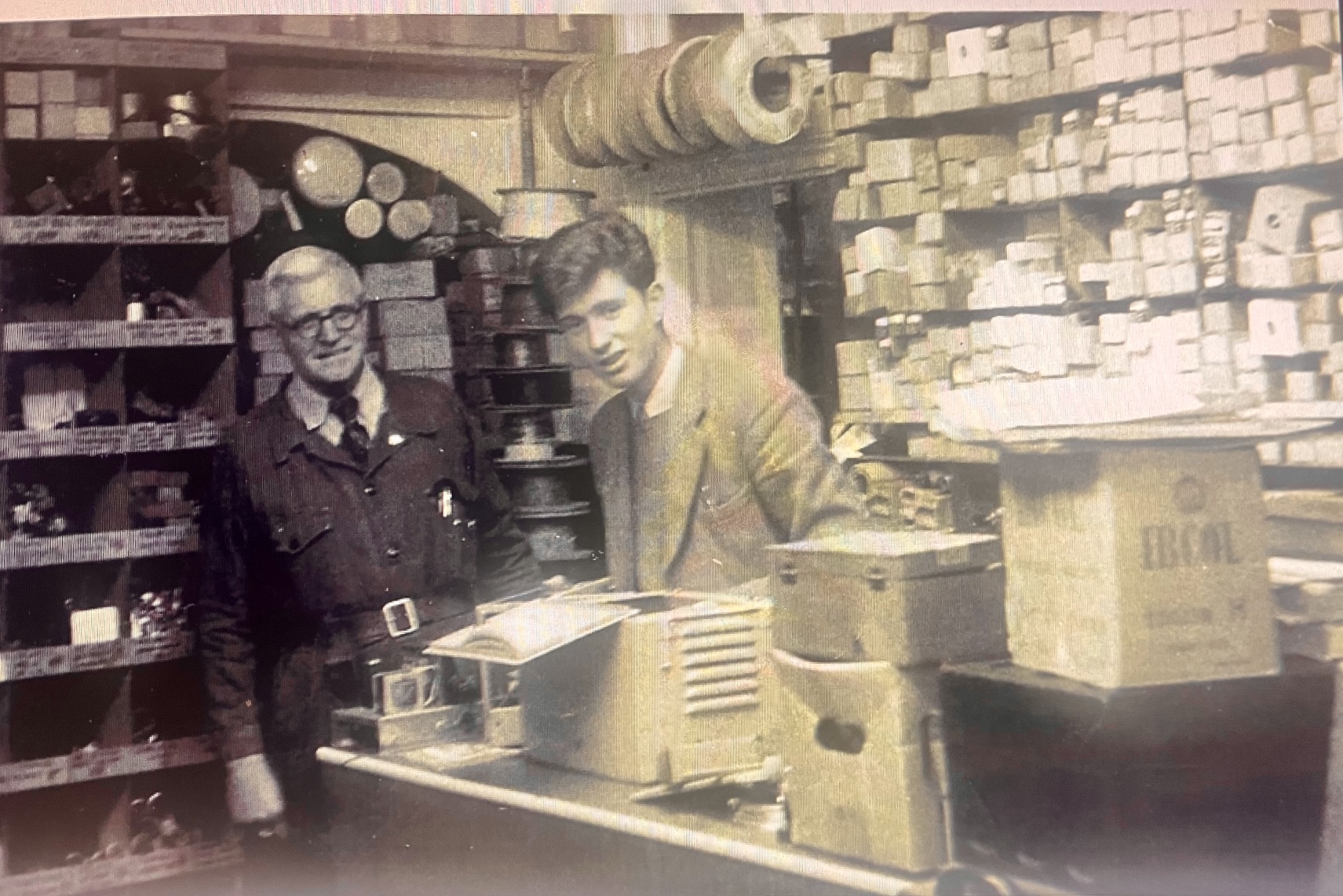
“The good looking guy is me the other chap is Sid Fuller and inside North road shop circa 1958. Sid was an ex Brighton police Sgt and a WW1 veteran a very knowledgeable guy. I was playing around with a wireless sender 76 ex British army.”